
 Community
 Video Library
 Agent Training
 Freshservice
 Freshdesk
 Freshchat
 Freshcaller
 Freshsales
 Freshteam
 Freshworks Neo
 Freshsurvey
 Freshservice for MSP
 TABLE OF CONTENTS
- Prerequisites
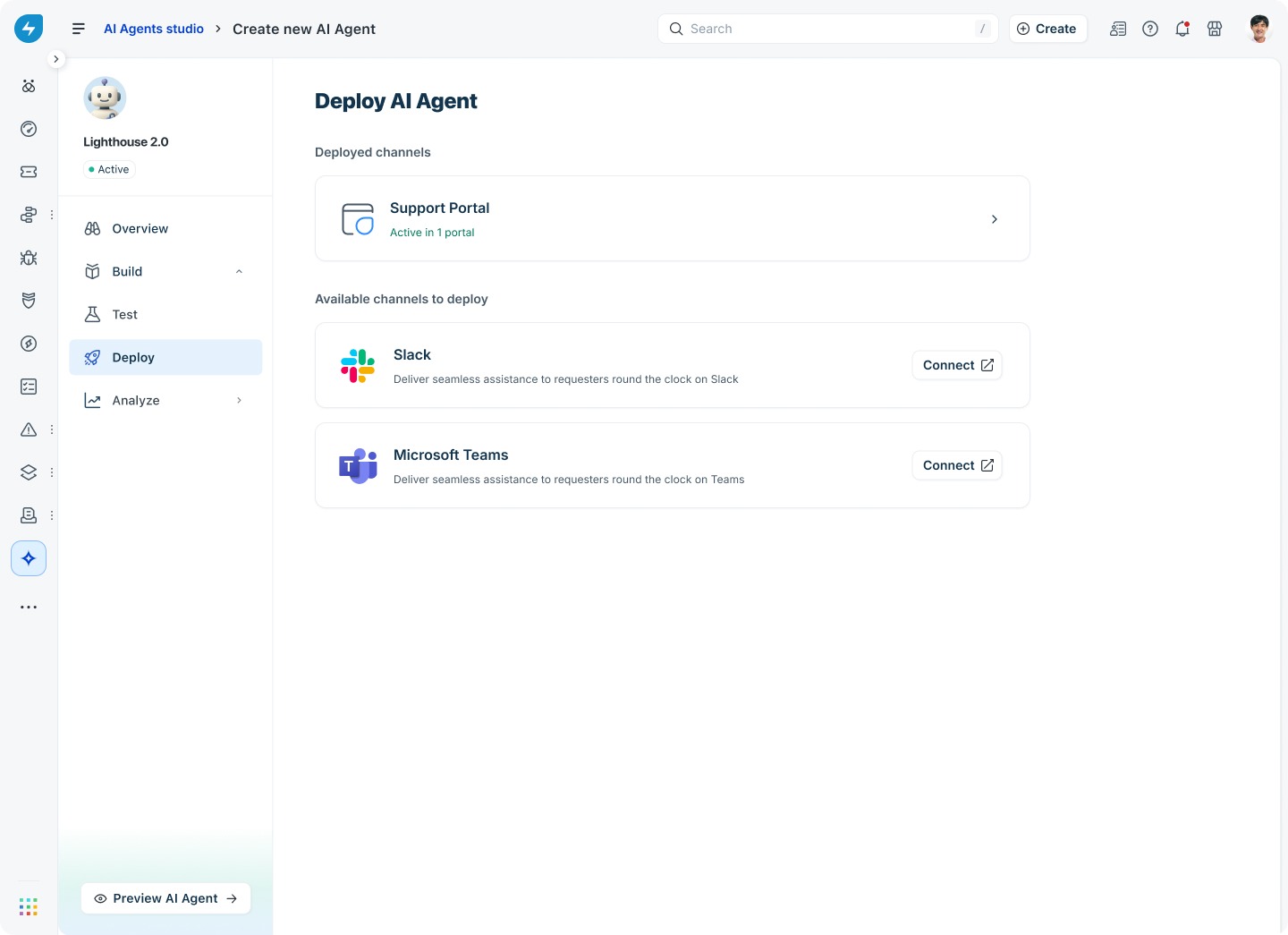
- Deploy the AI agent on the support portal
- Roll out the AI agent to a test group
- Roll out the AI agent to everyone
- Manage a deployed AI agent
- Frequently asked questions
Freshservice lets you deploy AI agents on your support portal so that employees can resolve incidents and service requests through natural conversation, without filing a ticket or waiting for an agent. Once deployed, the AI agent appears on your support portal and answers questions, surfaces knowledge base articles, and triggers workflows for the requester.
Prerequisites
Before you deploy an AI agent on the support portal, ensure that the following prerequisites are met:
Admin access to AI Agent Studio in Freshservice.
A built and tested AI agent in the AI Agent Studio. For details on building and testing an AI agent, see the AI Agent Studio documentation.
At least one active support portal in your Freshservice account.
Recommended
Complete preview and batch testing of the AI agent before deployment.
Define a small test group of users who will validate the AI agent first.
Review the AI agent’s responses against the most common requests handled by your support team.
Deploy the AI agent on the support portal
After your AI agent is ready, deploy it from the AI Agent Studio. You can choose to deploy it to a small test group first or to everyone on your support portal.
To open the support portal deployment settings
Log in to Freshservice and go to AI Agent Studio.
Open the AI agent you want to deploy.
In the left navigation, select Deploy.
Under Available channels to deploy, select Support portal.
Freshservice displays the support portal connected to your account, along with the deployment options available.
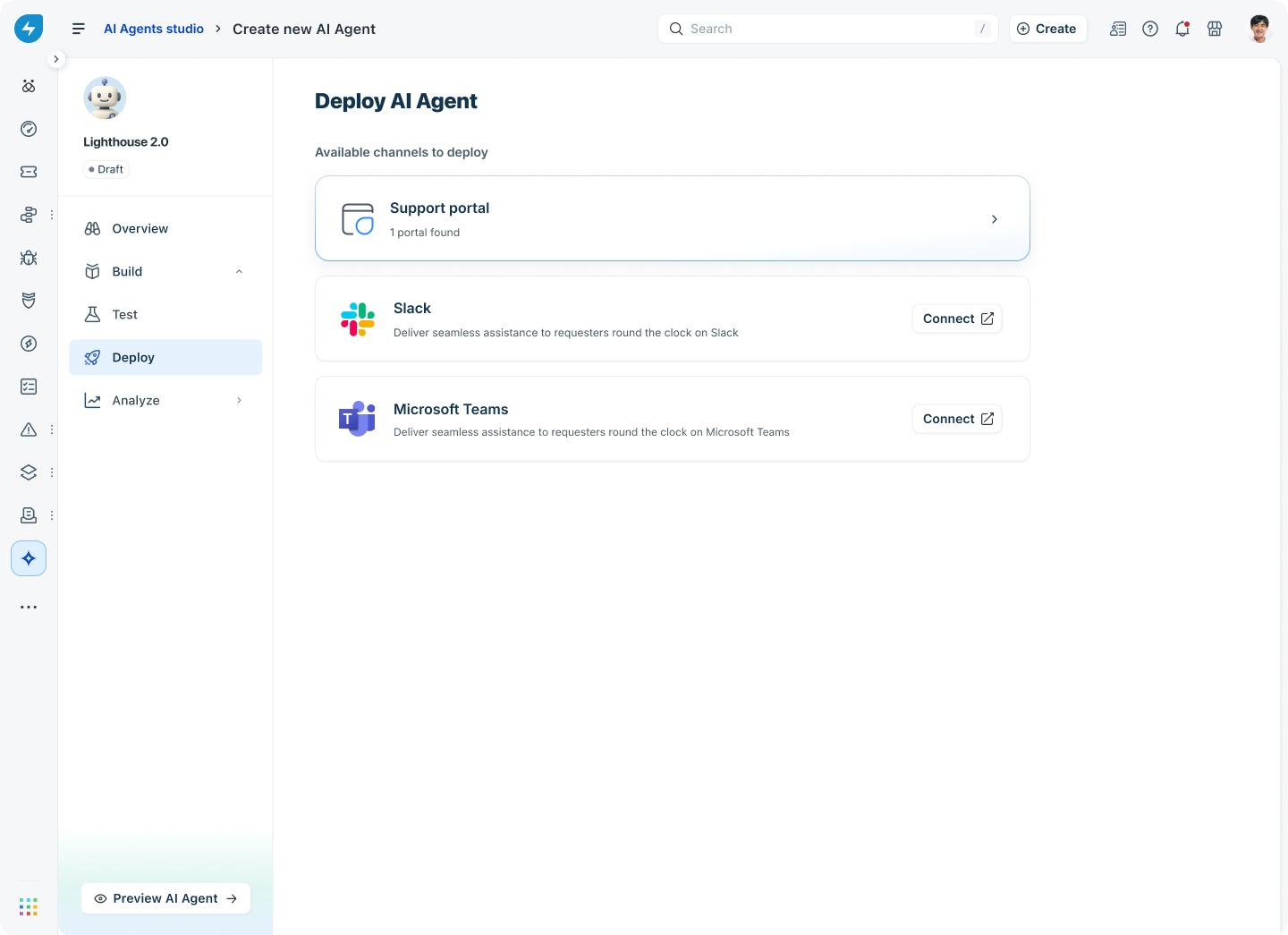
Note: The portal name shown on this page is the support portal URL configured in your Freshservice account. To update or manage your support portal, select Go to settings.
Select a deployment strategy
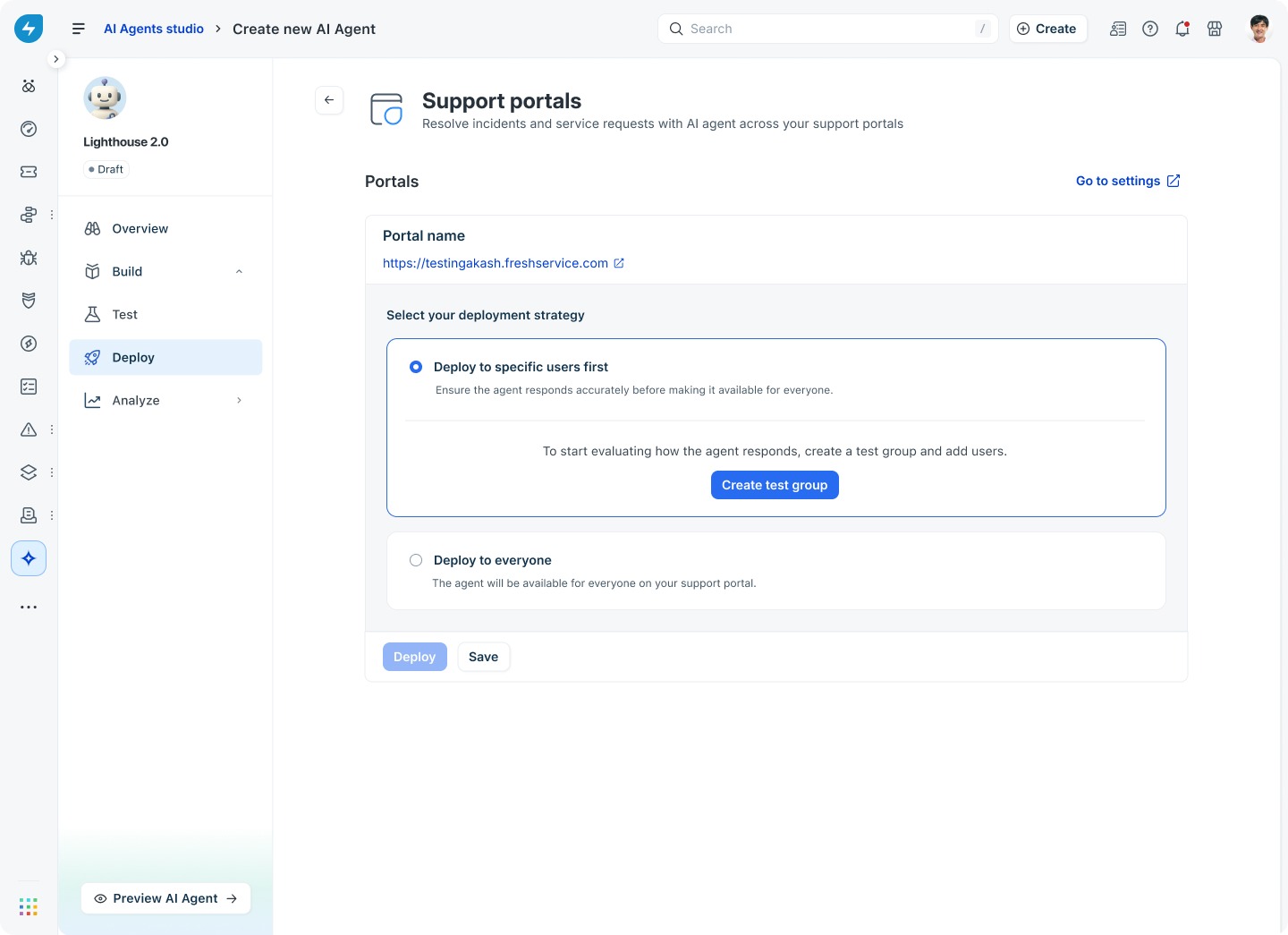
For the support portal, choose one of the following deployment strategies:
Tip: We recommend that you start with Deploy to specific users first. This lets you observe how the AI agent responds to real questions and refine it before a wider rollout
Roll out the AI agent to a test group
Use this option to make the AI agent available to a small group of users on your support portal. Test users see the AI agent when they sign in to the portal and can interact with it to validate responses before a wider rollout.
To create a test group
On the support portal deployment page, select Deploy to specific users first.
Select Create test group.
In the Create test group panel, select the users from your support portal who should have access to the AI agent during the test phase.
Select Done to save the test group.
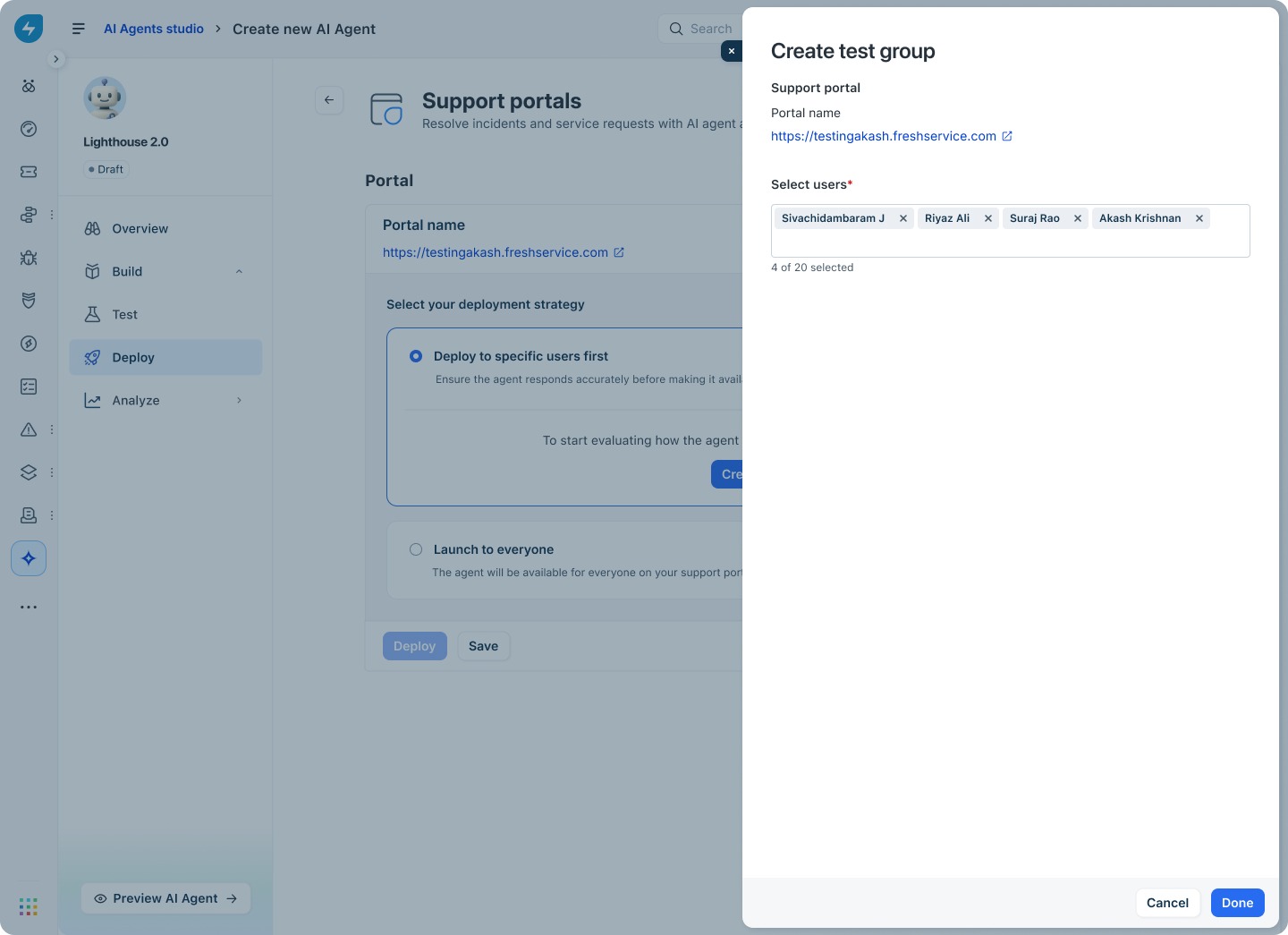
Note: Test users must already have access to your support portal. Users who are not part of the portal do not appear in the selection list.
To deploy to the test group
Review the test users on the support portal deployment page.
Select Deploy to make the AI agent available to test users immediately.
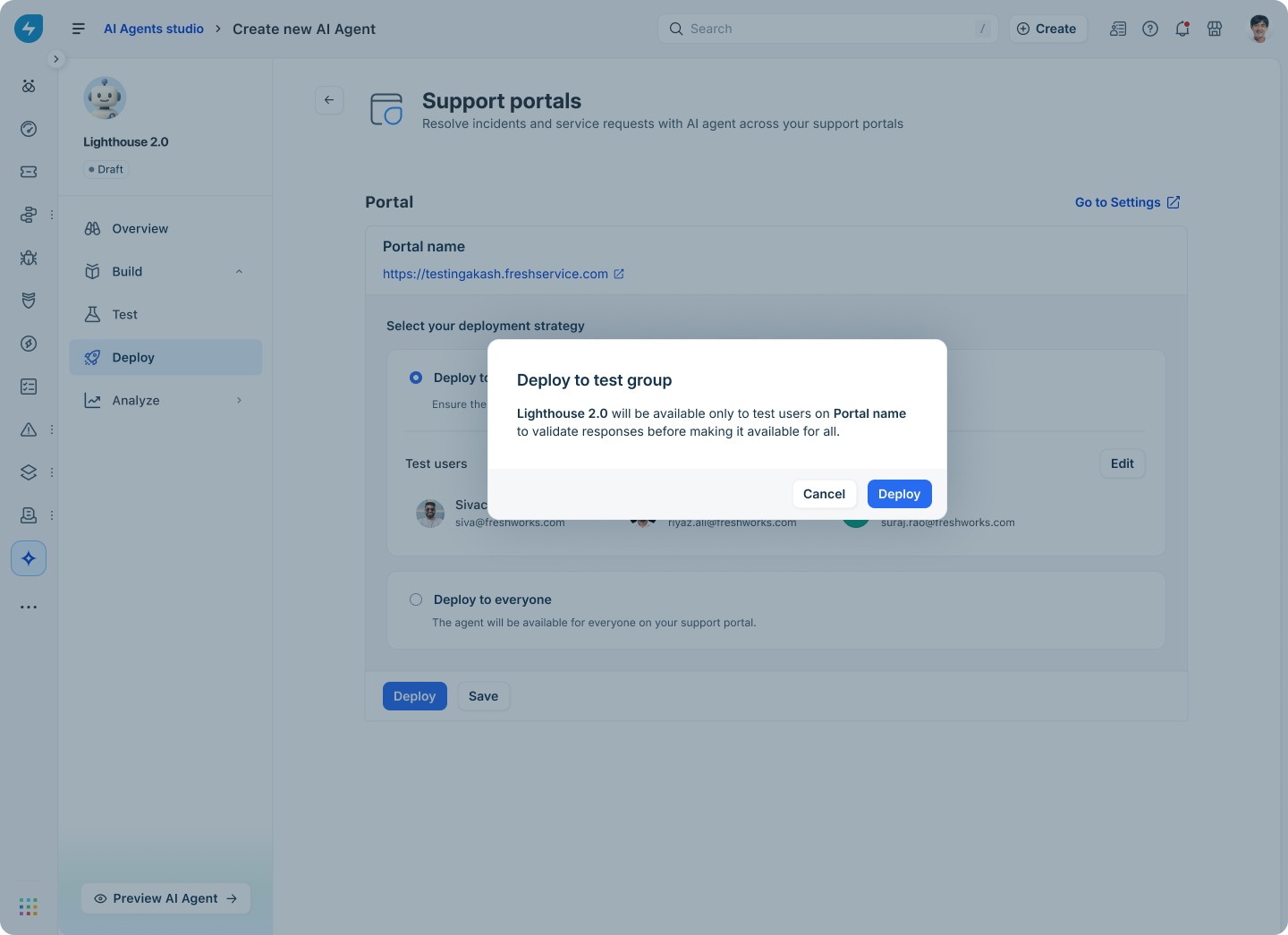
After deployment, the AI agent status changes to Active, and the portal is marked as In testing period.
Roll out the AI agent to everyone
After you are satisfied with the AI agent’s responses during the test phase, you can make it available to everyone on the support portal. You can also roll it out directly, without going through a test phase, by selecting Deploy to everyone.
To roll out the AI agent to everyone
On the support portal deployment page, select Deploy to everyone.
In the Deploy to everyone confirmation dialog, review the message and select Deploy.
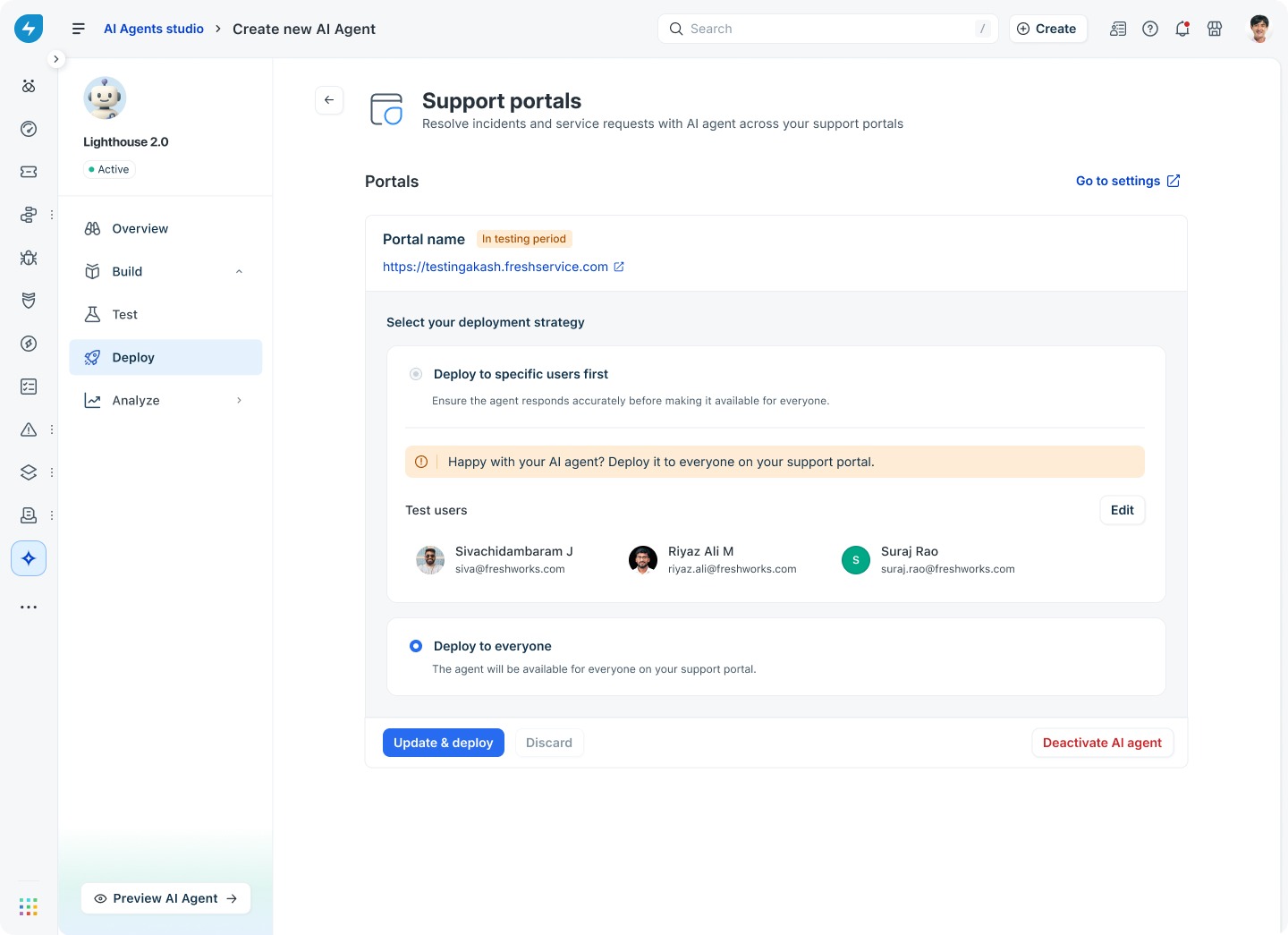
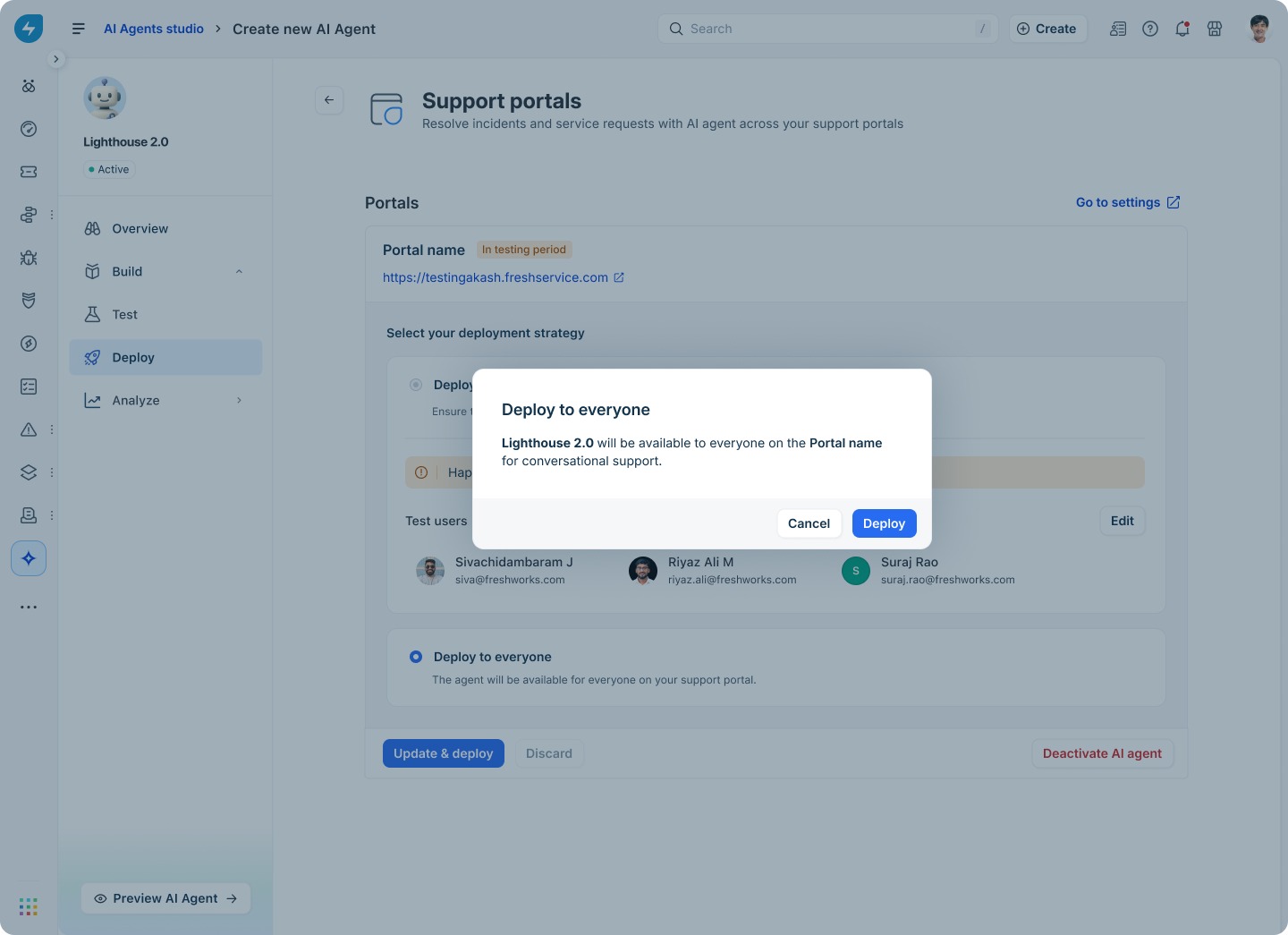
After deployment, all users on the support portal can interact with the AI agent for conversational support.
Manage a deployed AI agent
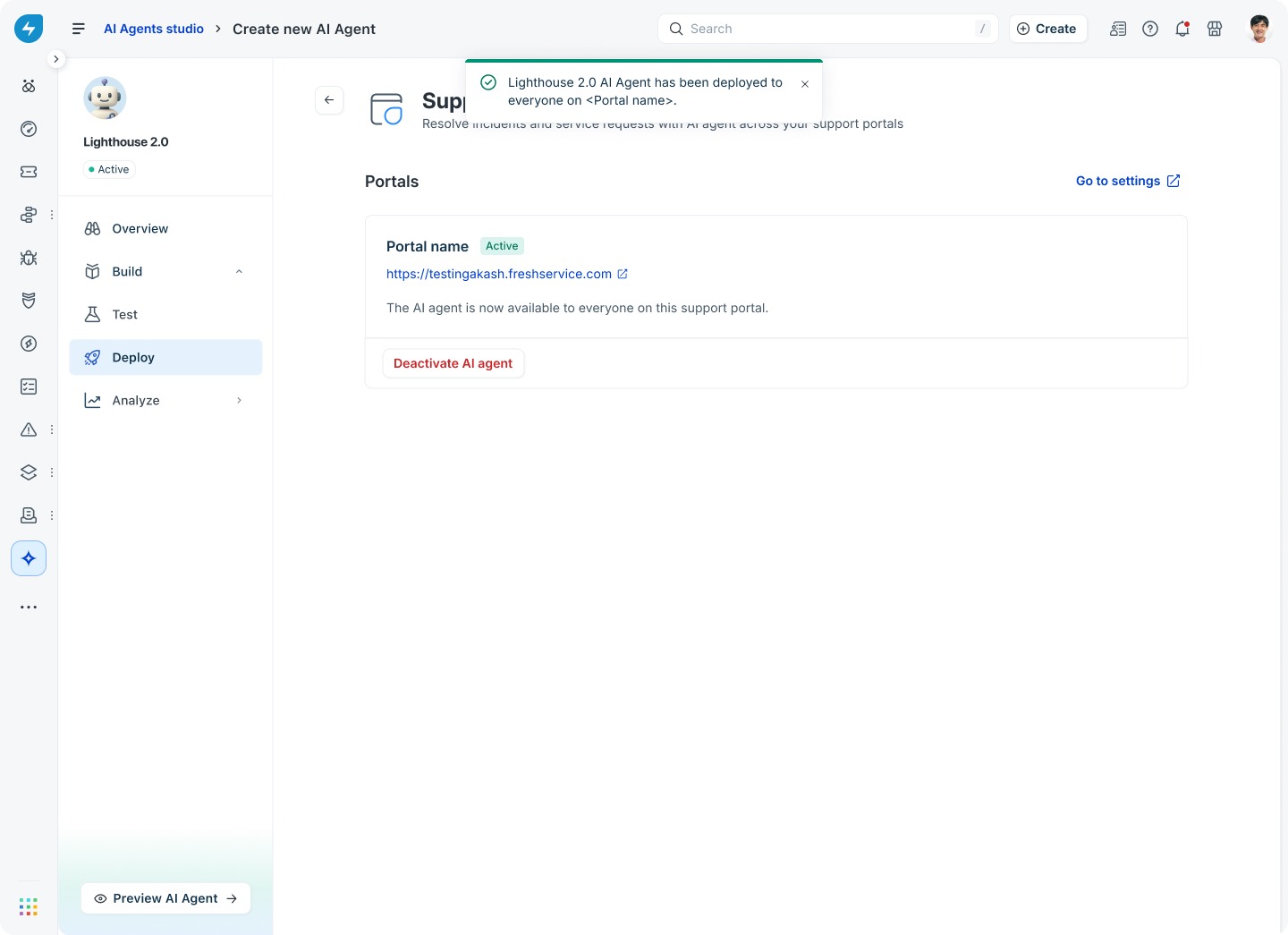
After deployment, you can view the AI agent’s status and deactivate it from the support portal deployment page.
Deactivate the AI agent
Deactivating the AI agent stops it from responding to users on the support portal. The deployment configuration is retained, so you can reactivate the AI agent later without setting it up again.
Go to the support portal deployment page.
Select Deactivate AI agent.
Confirm the deactivation when prompted.
Frequently asked questions
1. Can I deploy more than one AI agent on the support portal?
Each support portal can have one AI agent active at a time. To deploy a different AI agent, deactivate the current one and then deploy the new AI agent.
2. Can I move from a test rollout to a full rollout later?
Yes. After a test phase, switch the deployment strategy to Deploy to everyone and select Update & deploy to make the AI agent available to all users on the portal.
3. Do test users keep access after I roll out the AI agent to everyone?
Yes. Test users continue to see the AI agent on the support portal. When you roll out to everyone, all other users on the portal also get access.
4. Where does the AI agent appear on the support portal?
After deployment, the AI agent is available to requesters on the support portal as a conversational interface that they can use to resolve incidents and service requests.
5. What happens if I deactivate the AI agent?
The AI agent stops responding to users on the support portal. The deployment configuration, including the test users, is retained, so you can reactivate the AI agent later without reconfiguring it.
6. Can I edit the test group after deployment?
Yes. On the support portal deployment page, select Edit next to Test users to add or remove users from the test group.
7. What channels does Freshservice support for AI agent deployment?
In addition to the support portal, you can deploy AI agents on Slack and Microsoft Teams. Each channel is configured independently from the Deploy section of the AI agent.