
 Community
 Video Library
 Agent Training
 Freshservice
 Freshdesk
 Freshchat
 Freshcaller
 Freshsales
 Freshteam
 Freshworks Neo
 Freshsurvey
 Freshservice for MSP
 TABLE OF CONTENTS
- Overview
- Prerequisites
- Export tickets from the list view
- Export limits
- Export ticket data for longer date ranges
- Export Service Request item fields
- Export ticket conversations and notes
- Export ticket data using Analytics
- Schedule recurring ticket exports
- Export a single ticket
- Troubleshoot ticket export issues
- FAQs
Overview
You can export ticket data from Freshservice to analyze trends, create reports, or integrate with external systems. Depending on your requirements, you can export tickets from the list view, use Analytics for advanced reporting, schedule recurring exports, or retrieve data through the API.
This article explains the available export methods, supported data types, export limits, and troubleshooting steps.
Prerequisites
Before you export tickets, ensure that:
You have access to the tickets that you want to export.
For Analytics-based exports, you have access to Reporting > Analytics.
For API-based exports, you have access to the Freshservice API and the required API credentials.
If you are exporting Service Request item fields, identify the service items and fields that you want to include in the export.
Export tickets from the list view
Use the ticket list view to export ticket-level data in CSV or Excel format.
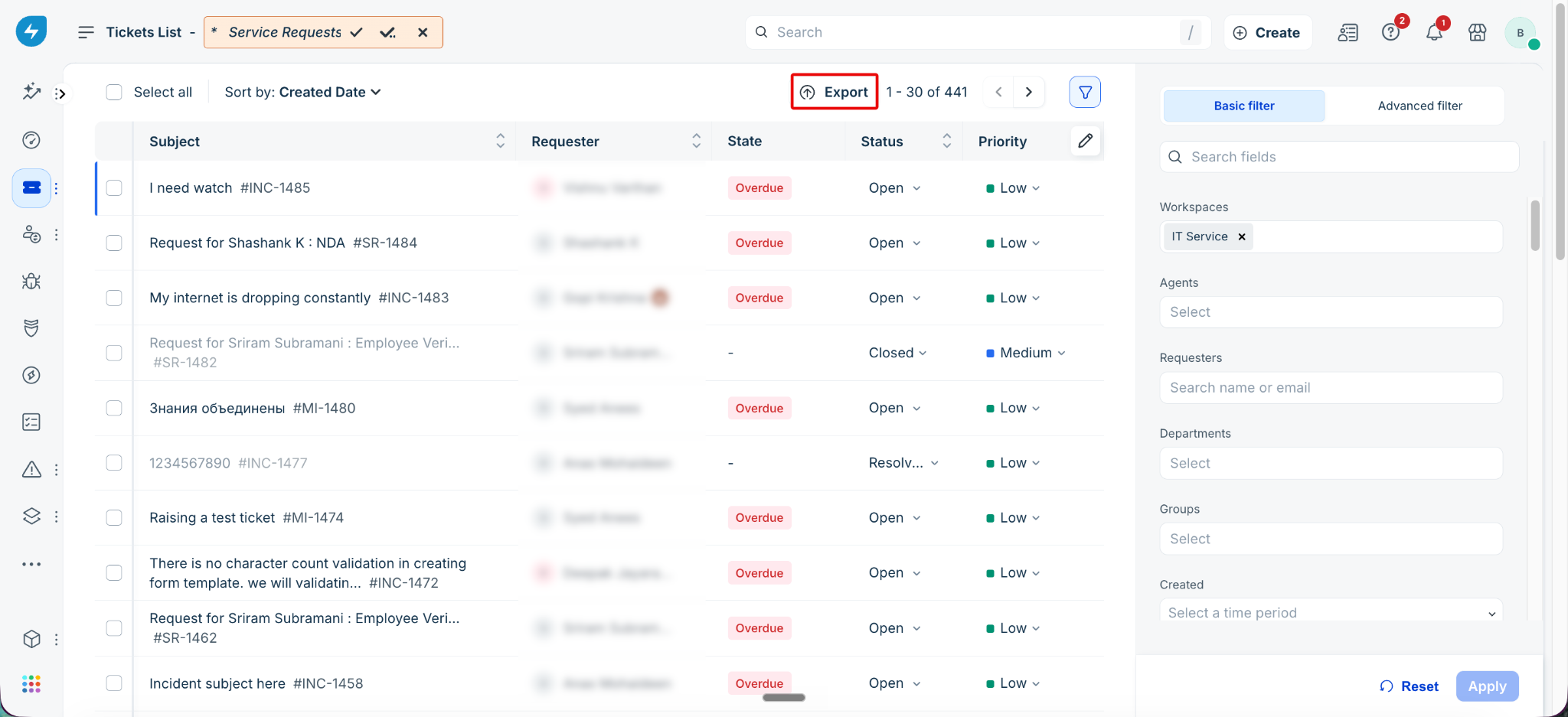
Go to Tickets.
Apply the filters required for the tickets that you want to export.
Click Export.
Select the export format:
CSV
Excel
Optionally, apply additional filters:
Created time
Resolved time
Closed time
Last 7 days
Last 30 days
Yesterday
Custom date range
Select the fields to include in the export.
Click Export.
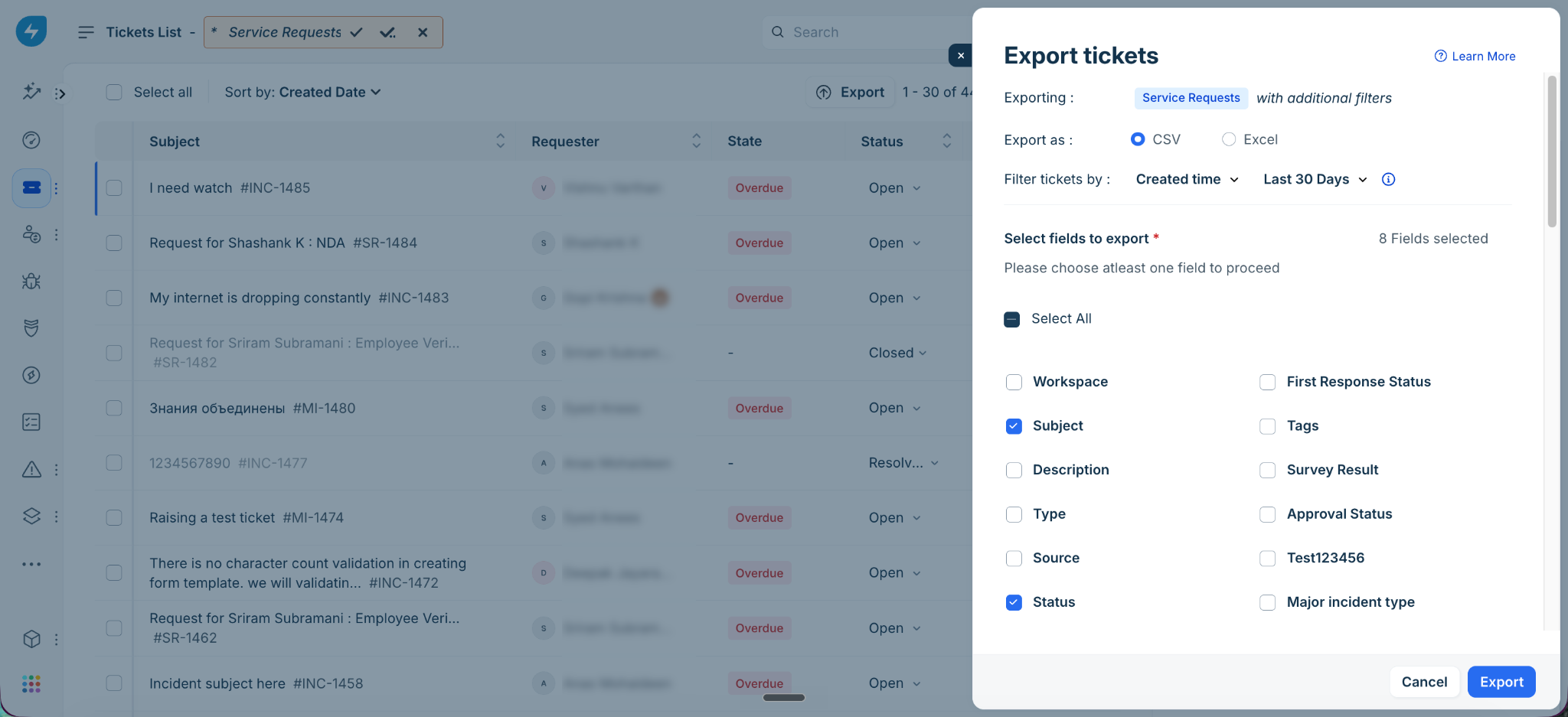
You receive an email containing the exported file.
Note:
If a field is missing from the export
Verify that the field was selected in the Export window.
Re-select fields for each export. Field selections are not retained.
Service Request item fields are not included in standard ticket exports. See Export Service Request item fields.
If the Export button is not available
The Export button is hidden when one or more tickets are selected in the list view. Clear all selections to display the Export button.
Export limits
The following limits apply to ticket exports:
If you reach the scheduled export limit, delete an existing scheduled export before creating a new one.
Export ticket data for longer date ranges
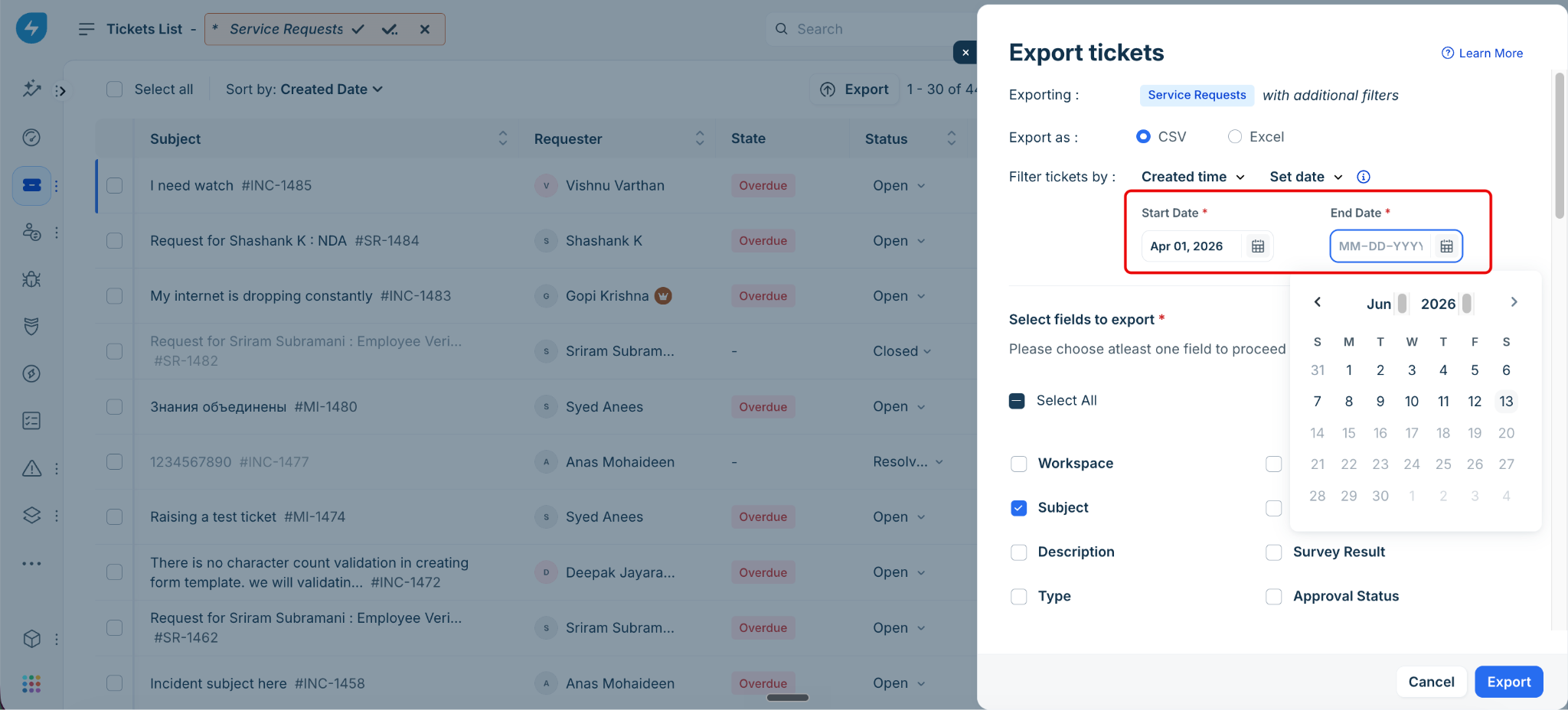
To export data beyond the default date range:
Apply the required date range filter in the ticket list view.
Click Export. The exported file includes all tickets that match the applied filters.
Export Service Request item fields
Service Request item fields are stored with the requested item rather than the ticket. As a result, they are not included in standard ticket exports.
Prerequisites
Requester ticket exports are governed by ticket visibility permissions. Requesters can export tickets that they are permitted to view, including:
Tickets they created.
Department tickets they have access to view.
There is no separate permission to enable or disable ticket exports. Access to exported data is determined by the requester's ticket visibility permissions.
Option 1: Use Analytics
Go to Reporting > Analytics.
Create a new report.
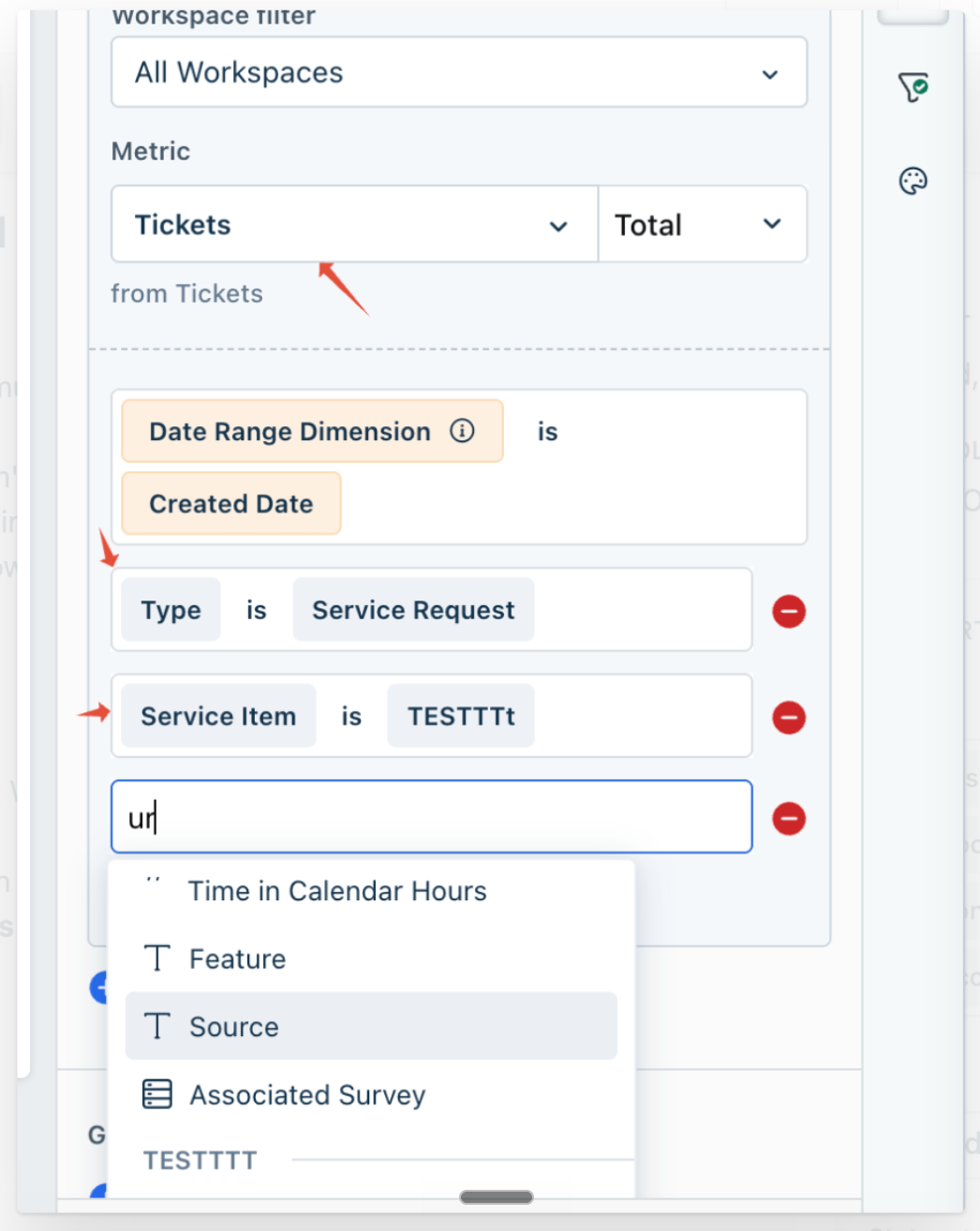
Add a chart widget.
Set the metric to Tickets.
Apply filters such as:
Type = Service Request
Service Item = required service item
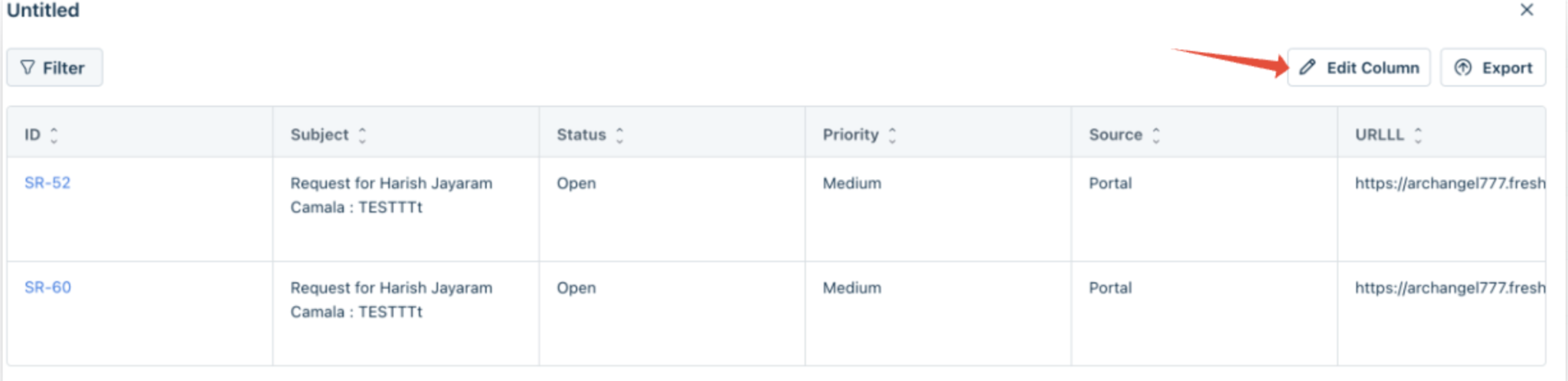
Click Underlying Data on the widget.
Click Edit Column and add the service item's custom fields to the column list.
Export the underlying data as CSV.
Option 2: Use the API
Use the Freshservice public API to retrieve service request data and captured field values. This option is useful for on-demand exports, recurring data extraction, or integrations with external systems.
Important:
Scheduled exports can only be emailed. Immediate downloads are not supported.
Standard data exports include ticket-level data only and do not include conversations or internal notes.
To retrieve conversations or notes, use the Conversations API. For multiple tickets, automate the process using a script.
For API details, see: https://api.freshservice.com/#list_all_conversations
Note on the Growth plan
On the Growth plan, custom Analytics reports may not be available. In that case the API is the supported way to retrieve Service Request item data.
Option 3: Copy Service Request data to ticket fields
If you frequently need specific Service Request item fields in exports, use Workflow Automator to copy the values to ticket fields.
After the values are stored on the ticket, they become available in standard ticket exports and Analytics reports.
Export ticket conversations and notes
Standard ticket exports include ticket-level fields only.
Include interactions in the ticket export
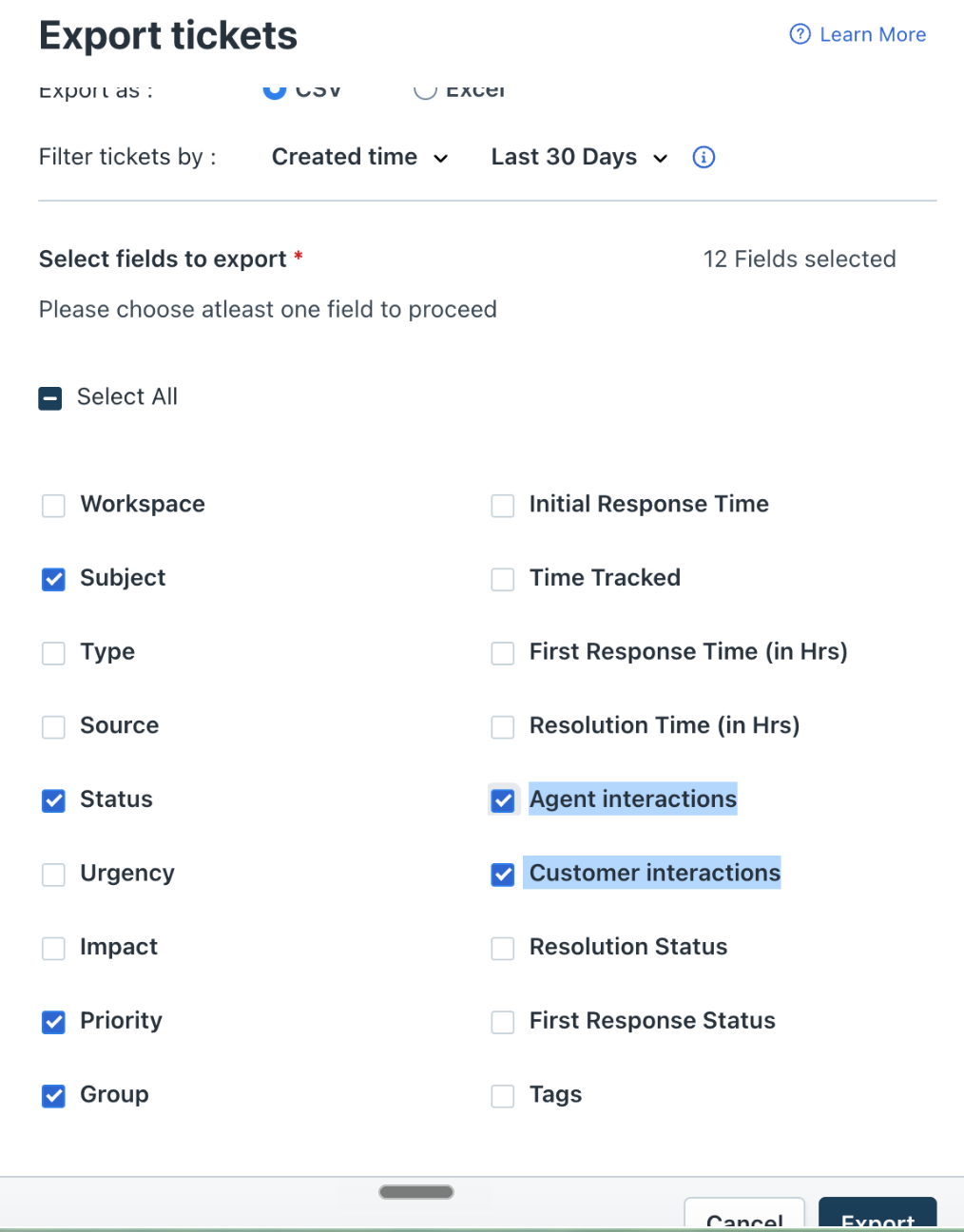
When configuring the export, follow these steps:
Select Agent interaction and Customer interaction as shown below. The export includes interaction content stored on the ticket.
Export complete conversation history
To export the complete conversation history, use one of the following methods:
Freshservice API
Account-wide XML export
These methods support a complete conversation history, including notes and timestamps.
Export ticket data using Analytics
Use Analytics when you need advanced filtering, grouping, or reporting capabilities.
Examples include:
Survey responses
Ticket ratings
Service Request item fields
Workspace-specific reporting
Use curated reports
Navigate to Analytics > Curated Reports and select a predefined report.
Create a custom report
Open Analytics.
Create a report in the required workspace.
Select Tickets as the metric.
Apply filters.
Add the required columns.
Run the report.
Export the underlying data as CSV.
Schedule recurring ticket exports
Use scheduled exports to regularly deliver ticket data through email or an API endpoint.
Open Analytics.
Go to Settings > Data Exports.
Click Create Export.
Enter a name.
Select a module.
Configure the schedule.
Apply filters.
Select the required fields.
Choose an export method:
Email
API link
Save the export.
You can use the generated API link with reporting tools such as Power BI.
Export a single ticket
To create a record of a single ticket:
Open the ticket.
Use your browser's print function.
Save the ticket as a PDF.
The PDF includes ticket details, conversation history, and metadata.
Troubleshoot ticket export issues
I did not receive the export email
Check your spam or junk folder.
Verify your email address in your agent profile.
Run the export again if the export was delayed.
Custom fields are missing
Verify that the fields were selected during export.
If the fields belong to a Service Request item, use Analytics or the API.
The export contains unexpected tickets
Verify that the filters in the ticket list and the Export window match.
Values are missing from a column
Verify that the data appears in Analytics. If so, export the report from Analytics rather than the ticket list view.
PDF exports are missing records
Analytics PDF exports are limited to 200 records. Export the data as CSV to retrieve the complete dataset.
FAQs
1. Where can I find the exported file?
The exported file is sent to the email address associated with your agent profile.
2. How do I export more than 30 days of data?
Apply the required date range filter in the ticket list view before exporting.